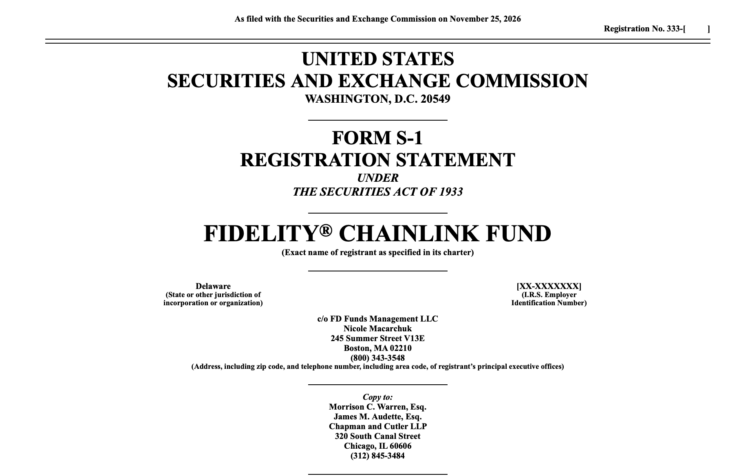
Fidelity filed a preliminary registration statement with the SEC on November 25, 2026, for a fund that would hold Chainlink’s LINK token directly and trade on Nasdaq under the ticker FLNK. At the time of reporting on November 26, 2026, at 11:58:10 (UTC+08:00), the Fidelity Chainlink Fund had no launch date or final annual sponsor fee. The registration statement must become effective and the Nasdaq listing must proceed before investors can trade the shares.
What shareholders would own
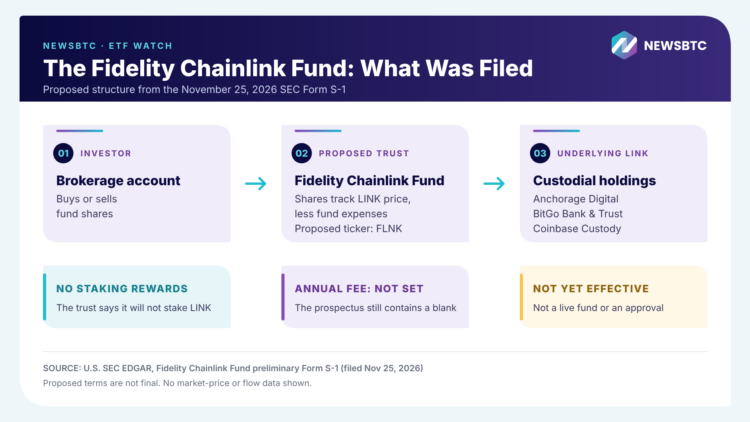
Investors would buy securities in a brokerage account, not receive LINK in a wallet they could use with Chainlink services. The trust intends to hold its LINK on Ethereum and names Anchorage Digital Bank, BitGo Bank & Trust and Coinbase Custody as custodians. It would not stake the tokens, so shareholders would not receive staking rewards.
The fund would aim to track LINK’s U.S. dollar performance, less expenses and liabilities. Its proposed reference rate would use a volume-weighted median of prices from eligible LINK spot markets, calculated every 15 seconds using a rolling 60-minute window. That rate would help value the holdings; it would not guarantee that shares trade at net asset value, particularly when trading is thin or prices are volatile.
What would count as new demand
Brokerage customers already have ways to get exposure to LINK. According to its SEC disclosures, Grayscale’s Chainlink Trust ETF (GLNK) has had a share creation and redemption program since December 2025. The Bitwise Chainlink ETF (CLNK) appeared in a January 2026 Nasdaq information circular. In November 2026, Charles Schwab also rolled out direct LINK trading to eligible crypto clients.
Fidelity’s brokerage relationships could reach investors who would not otherwise buy LINK. But if one investor buys an existing FLNK share from another, the trust would not need to acquire more tokens. Under the proposal, authorized participants would separately create or redeem large blocks of shares using cash or LINK. Creations in excess of redemptions could increase the trust’s LINK holdings; net redemptions could reduce them.
If the fund launches, changes in shares outstanding, tokens held and net creations would show whether its holdings are growing. Comparing those figures with flows at rival funds would help distinguish new demand from investors switching products. Neither the filing nor a subsequent rise in the share price would establish that fresh money had entered the LINK market.