
Bitcoin’s seven-day average ratio of supply in profit to supply in loss fell to 0.825 on Nov. 26, 2026, its lowest reading since September 2015, according to CryptoQuant. That amounts to 0.825 BTC held at an unrealized profit for every 1 BTC held at an unrealized loss. The 30-day average, at 1.27, still showed more supply in profit than in loss.
The shorter-term measure followed a decline to $55,081 on Nov. 21, when Bitcoin’s month-to-date loss reached 28.8%. On Nov. 27, CryptoQuant contributor CryptoZeno noted that similar readings had appeared near major market bottoms, including in 2022. For a lasting improvement in profitability, the analyst said, both averages would need to stabilize above parity.
What the sell-side reading measures
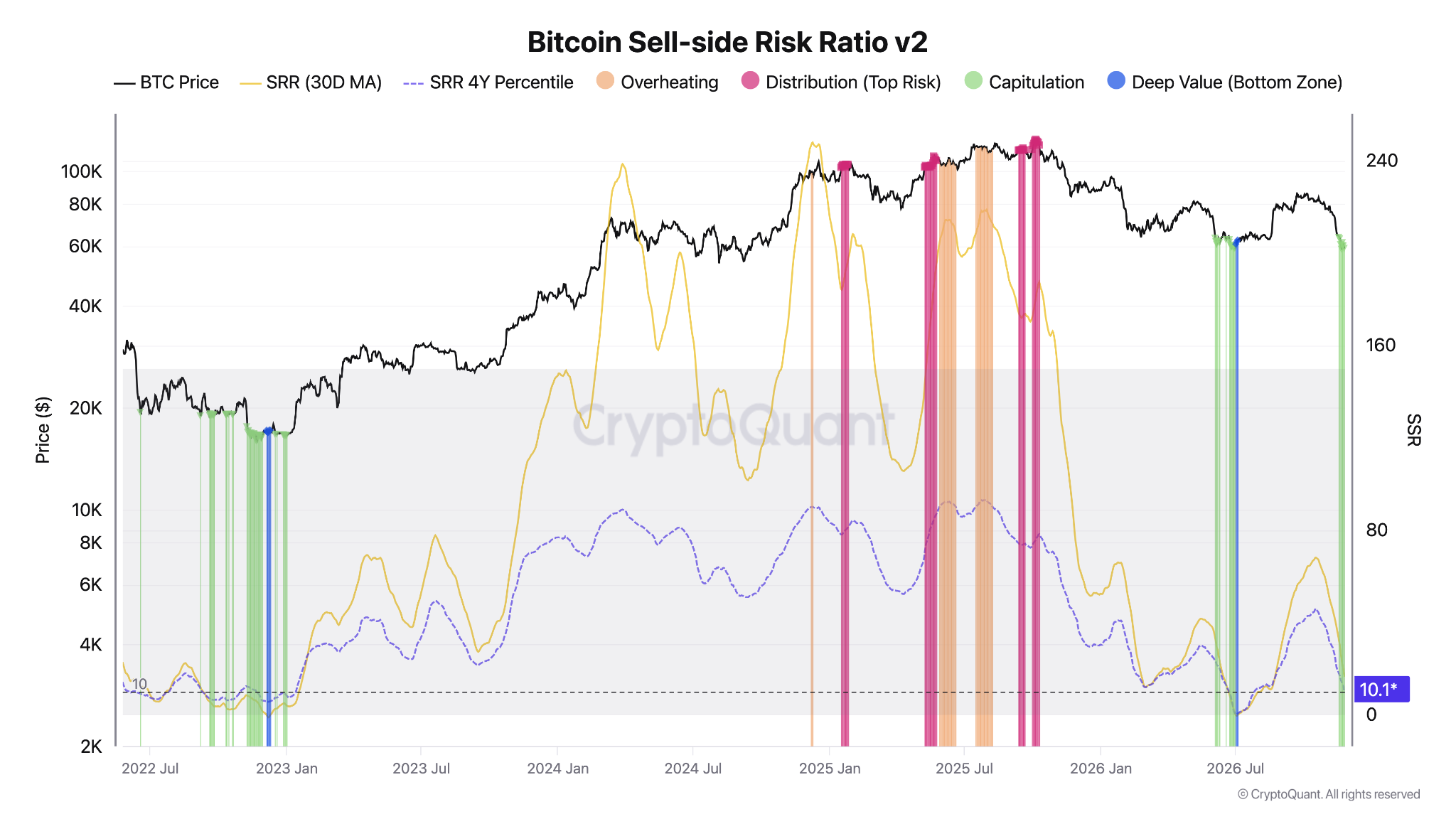
CryptoQuant’s sell-side risk ratio fell to 16.52 on a 30-day moving average, a level rarely seen outside bear-market bottoms. The ratio compares total profits and losses realized when coins move onchain with Bitcoin’s realized capitalization. It treats transfers as potential selling pressure, not as confirmed sales.
With Bitcoin trading around $60,000, CryptoQuant’s analysis interpreted the low reading as a sign that sellers might be nearing exhaustion. It was one of several periods of apparent capitulation in 2026, the first such periods since the end of the 2022 bear market. The reading did not establish that the price had bottomed.
Profitability had come under pressure for both short- and long-term holders. Bitcoin’s realized price, the average price at which coins in the existing supply last moved onchain, stood near $53,200. Previous bear markets made that level a point of comparison rather than a forecast.