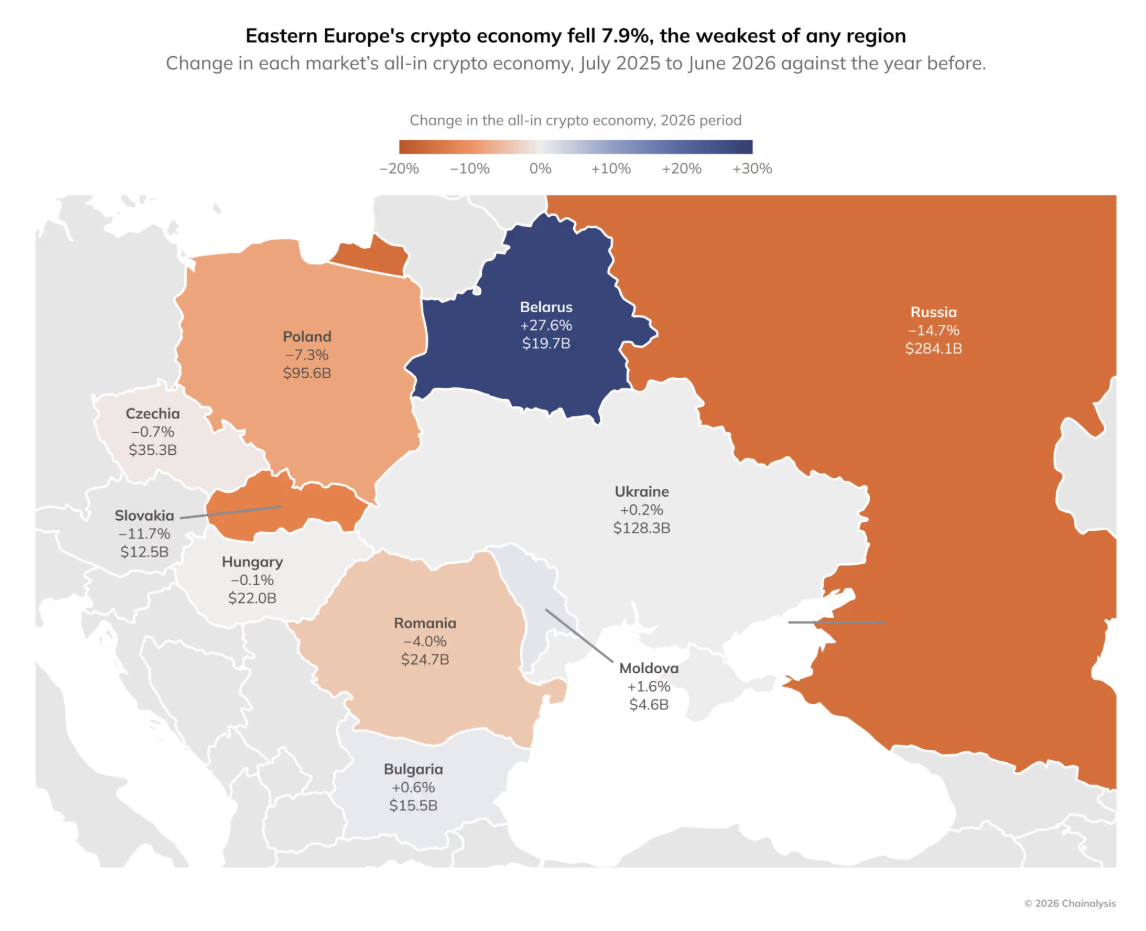
As reported on November 18, 2026, Chainalysis found that the dollar value of crypto activity in Eastern Europe fell 7.9% in the year ended June 2026. The regional total declined to $642.1 billion from $697.1 billion a year earlier, compared with a 1.6% decline globally. The figures describe measured flows, not the number of payments made.
The change was uneven. Russia accounted for roughly 44% of the regional total, and its activity fell 14.7% to $284.1 billion. Belarus recorded 27.6% growth, while Bulgaria, Moldova and Ukraine saw smaller increases.
Smaller transfers gained share
The value of transfers of $10,000 or more to crypto services fell 17.4%, from $591.5 billion to $488.6 billion, according to Chainalysis. Transfers below that threshold rose 8.3% in value. Those smaller transfers made up 13.1% of the value sent to crypto services in Eastern Europe—the highest share among the regions studied, against a global average of 10.1%.
Crypto ATM transaction volume across the region nearly doubled, from $17.3 million to $33.9 million. In Poland, ATM transactions rose 120% despite a 5% decline in centralized exchange activity; stablecoins accounted for roughly 90% of the country’s ATM transactions.
Stablecoin transfers to Ukraine
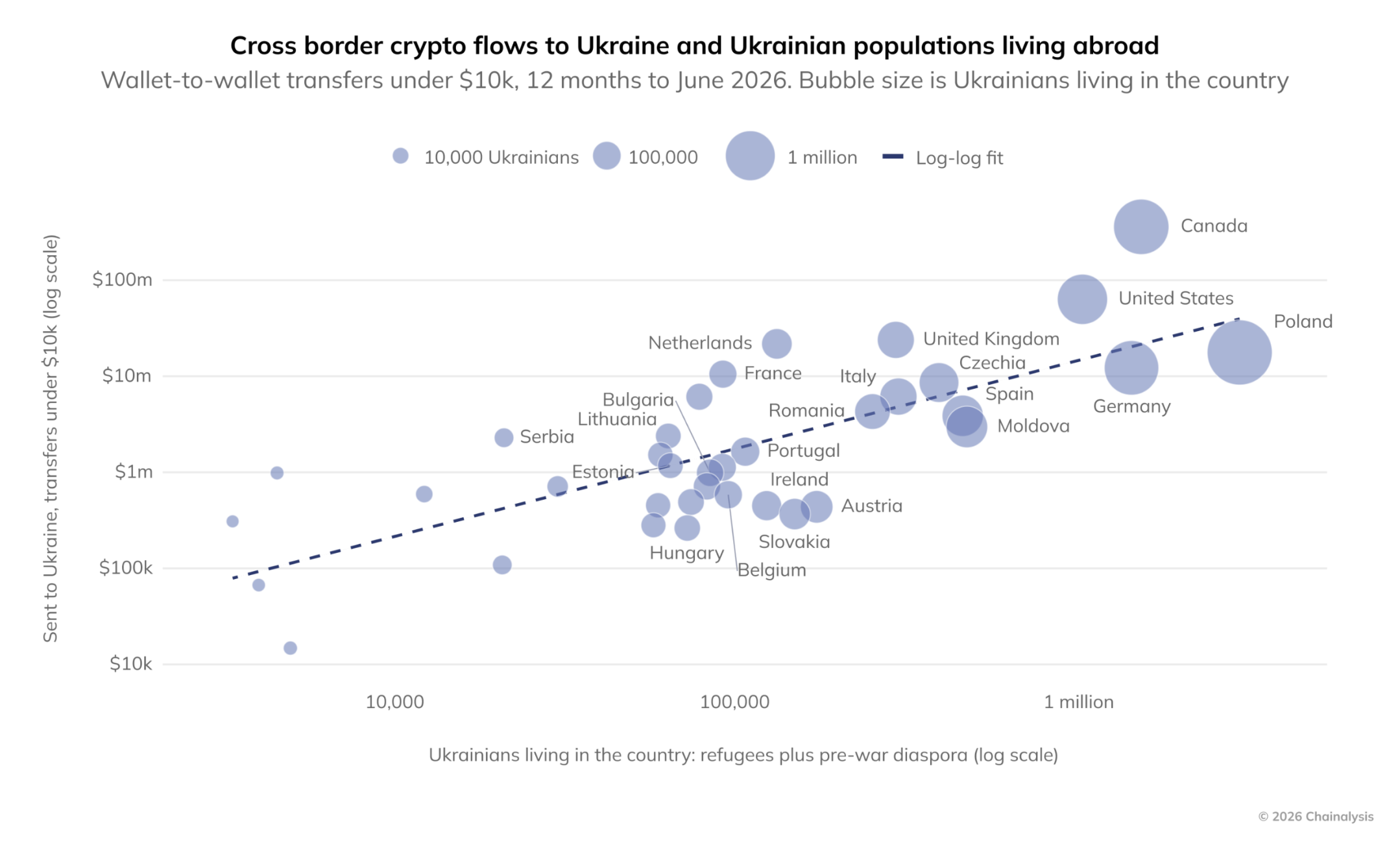
Chainalysis reported $12 billion in cross-border stablecoin transfers received by Ukrainian personal wallets, including $2.41 billion in transfers below $10,000. Across 36 countries studied in Europe and North America, Canada was the largest source of retail-sized, remittance-like transfers to Ukraine, at $359 million. Chainalysis found that countries with larger Ukrainian populations generally sent more stablecoins to Ukraine.
A Chainalysis spokesperson told Cointelegraph that the cross-border flows were largely in US dollar-pegged stablecoins, but the firm did not provide a breakdown by token. Chainalysis measures crypto activity using inflows to services, domestic transfers between personal wallets and cross-border inflows to personal wallets. Because its totals are expressed in dollars, changes in crypto prices can also affect them.