A customer pays in stablecoins, but the merchant receives Hong Kong dollars in a bank account. Which licences might the payment provider need? The answer depends less on the product’s name than on who receives the funds, converts the stablecoins, controls the wallet and delivers the final payment.
In an analysis published on November 16, 2026, Shao Jiadian of Mankun Blockchain Legal Services examined those steps separately. The distinctions matter because a licence covering fiat remittances does not, by itself, authorise virtual-asset trading or custody.
Follow the payment to the merchant
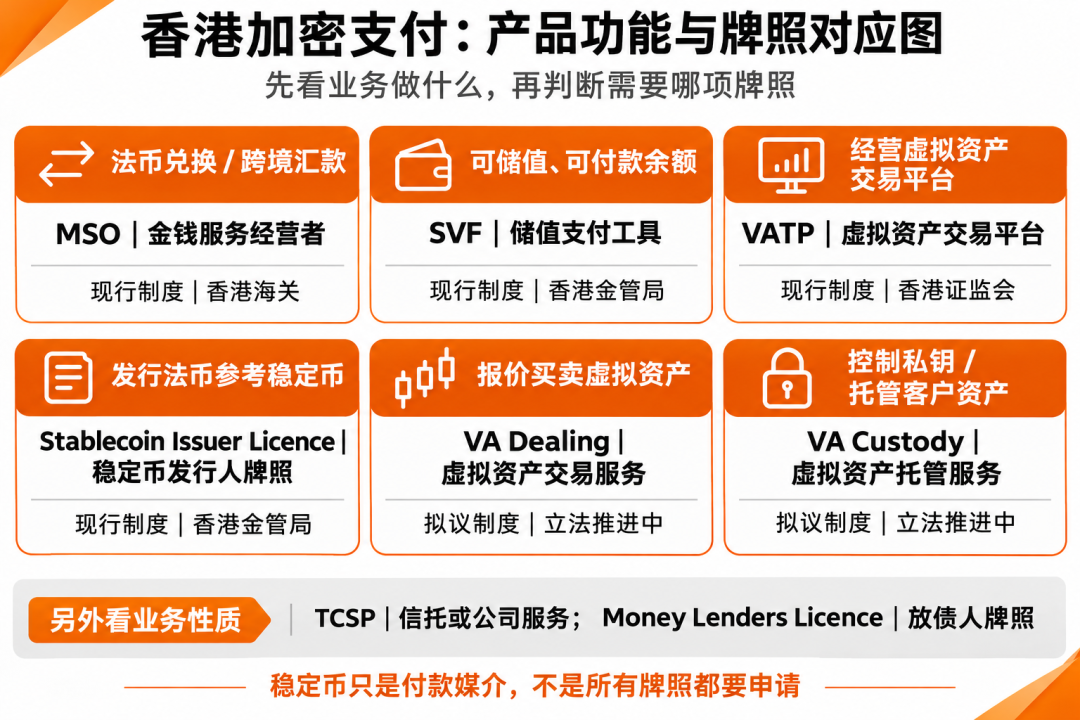
If a provider accepts a customer’s instructions and arranges cross-border receipt or remittance of fiat currency, Hong Kong’s Money Service Operator (MSO) framework may be relevant. A bank making the final transfer does not automatically remove the provider’s own role from that assessment. Shao notes that an MSO licence covers fiat exchange and remittance—not the purchase and sale of stablecoins. A provider using a licensed MSO for the Hong Kong dollar leg would still need to examine which party is responsible for each step under their agreement.
What happens after the merchant is paid raises a different question. If proceeds go directly to the merchant’s external bank account, the arrangement differs from one in which the platform retains a balance that the merchant can use to pay suppliers or other third parties. Shao identifies retained funds combined with a subsequent payment function as the key Stored Value Facility (SVF) issue; the mere appearance of a balance is not the whole test. The analysis cites a minimum paid-up share capital requirement of HK$25 million for an SVF applicant.
Conversion and wallet control are separate decisions
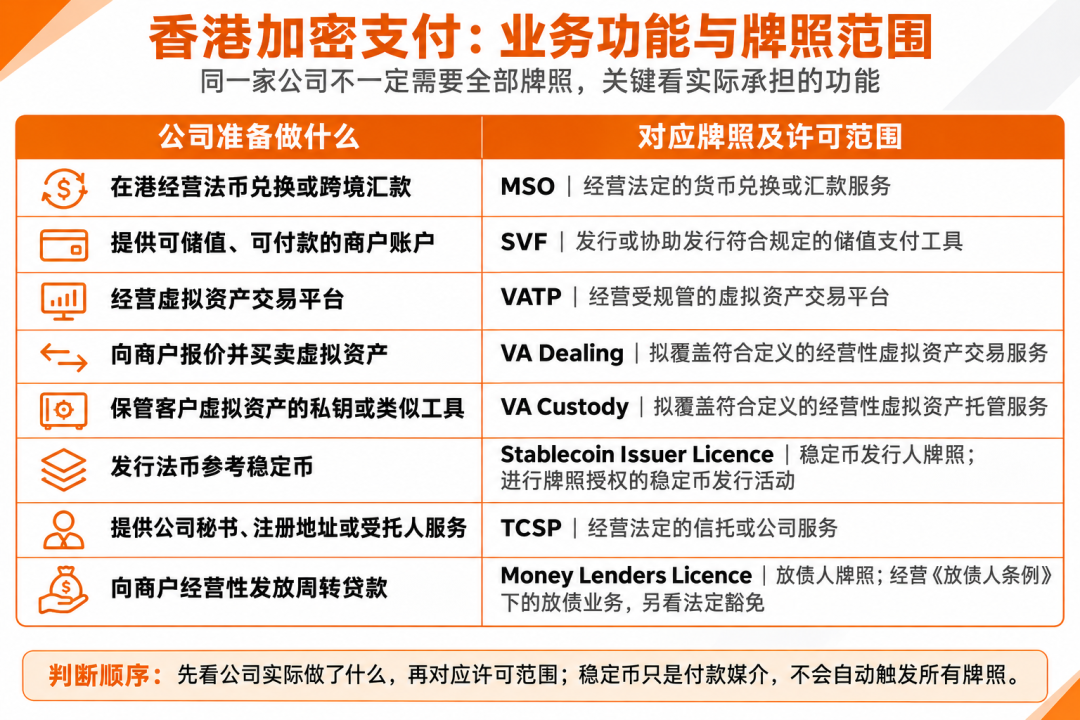
Using stablecoins for settlement does not necessarily make a payment service a virtual-asset trading platform. Shao distinguishes a payment flow using an external conversion quote from a platform that offers customers a market for matching buy and sell orders. If a provider builds its own trading mechanism, its regulatory position changes.
The analysis also separates proposed licensing regimes from existing licences. It says Hong Kong was developing distinct regimes for virtual-asset dealing and custody. A provider that buys customers’ stablecoins as principal may therefore face a different future licensing question from one arranging the fiat remittance. Likewise, if a platform holds merchants’ private keys and must sign their transfers, it controls customer assets—a different arrangement from merchants controlling their own wallets. Shao discusses third-party custody or a non-custodial design as alternatives to assess, not automatic exemptions.
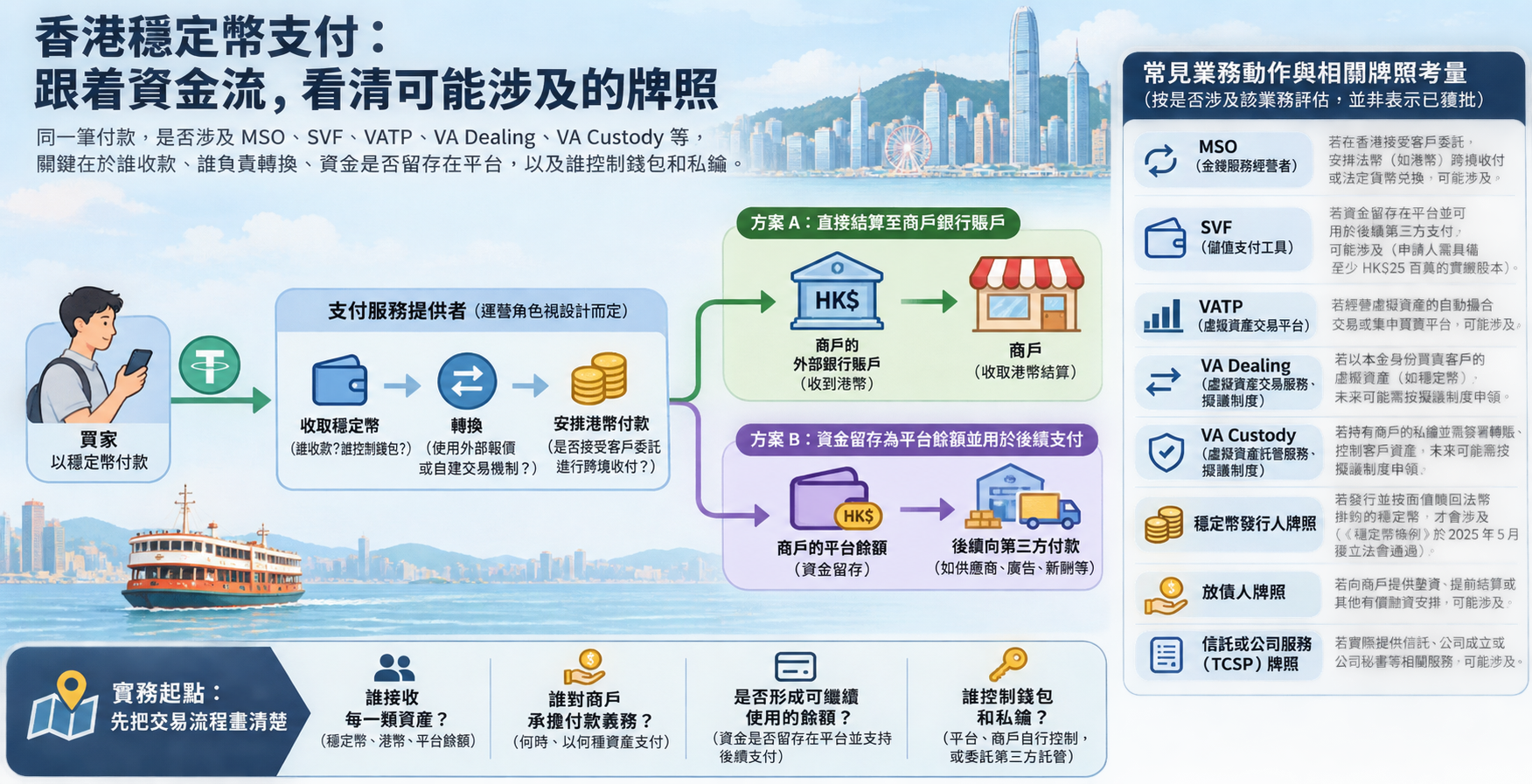
Other features introduce further questions. Hong Kong’s stablecoin issuer licence concerns issuing and redeeming fiat-backed stablecoins, rather than simply using an existing stablecoin in a payment flow; the Legislative Council passed the Stablecoins Ordinance in May 2025. Advancing funds to merchants before their proceeds arrive may raise money-lending issues if it amounts to paid financing. Trust or company-service licensing depends on whether those services are actually provided.
The practical starting point is a map of the transaction: who receives each asset, who owes the merchant a payout, where any balance can be spent, and who controls the keys. That map makes the relevant licence questions clearer than treating “crypto payments” as a single regulated activity.