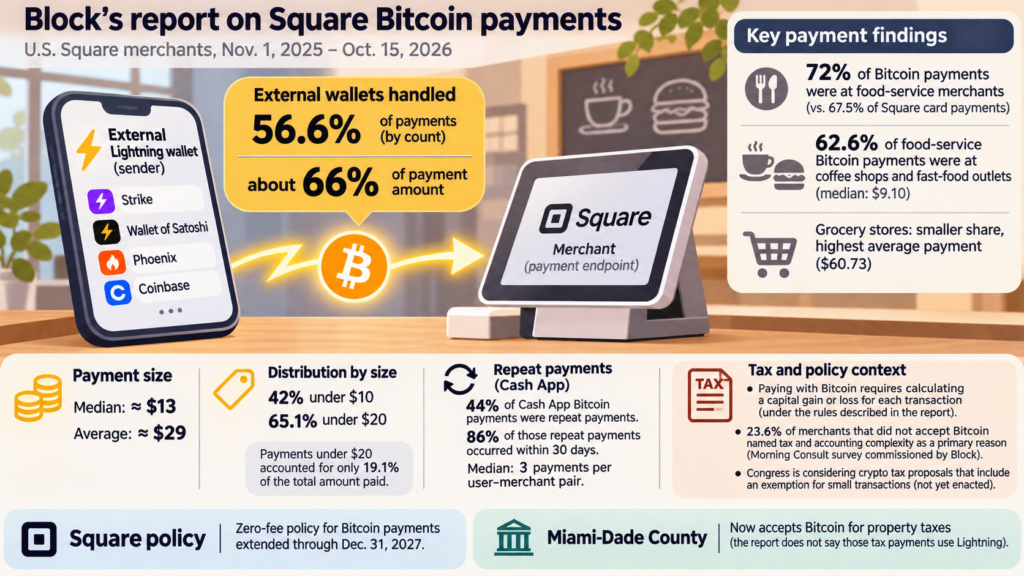
Block’s The State of Bitcoin Payments report examined Bitcoin payments made to US Square merchants from November 1, 2025, through October 15, 2026. According to a November 20, 2026 report by ChainCatcher citing Bitcoin Magazine, the median payment was about $13 and the average was about $29.
Food-service merchants accounted for 72% of the Bitcoin payments, compared with 67.5% of Square card payments during the same period. Coffee shops and fast-food outlets made up 62.6% of the food-service Bitcoin payments, with a median payment of $9.10. Grocery stores represented a smaller share but had the highest average payment, at $60.73.
About 42% of Bitcoin payments were under $10, and 65.1% were under $20. Payments under $20 accounted for only 19.1% of the total amount paid. Among Cash App users who paid the same merchant with Bitcoin at least twice, the median was three payments per user–merchant pair. Repeat payments accounted for 44% of Cash App Bitcoin payments; 86% of those repeat payments occurred within 30 days.
External Lightning wallets—including Strike, Wallet of Satoshi, Phoenix and Coinbase—handled 56.6% of Bitcoin payments by count and about 66% by amount. The report does not provide enough detail to compare how those wallets handled funding, custody or payment routing.
Square has extended its zero-fee policy for Bitcoin payments through December 31, 2027. Miami-Dade County has also begun accepting Bitcoin for property taxes; the report does not say those tax payments use Lightning.
Block also pointed to a tax constraint: under the rules described in the report, paying with Bitcoin requires calculating a capital gain or loss for each transaction. In a Morning Consult survey commissioned by Block, 23.6% of merchants that did not accept Bitcoin named tax and accounting complexity as a primary reason. Block said Congress was considering crypto tax proposals that include an exemption for small transactions—not that an exemption had been enacted.