
In a crypto news roundup published on November 20, 2026, Bitcoin staking protocol Babylon outlined a possible wind-down, while Fluidkey reported a security incident affecting users. The two developments have different implications: Babylon’s plan remains a proposal, whereas Fluidkey has already taken its services offline.

Babylon’s proposed staking exit
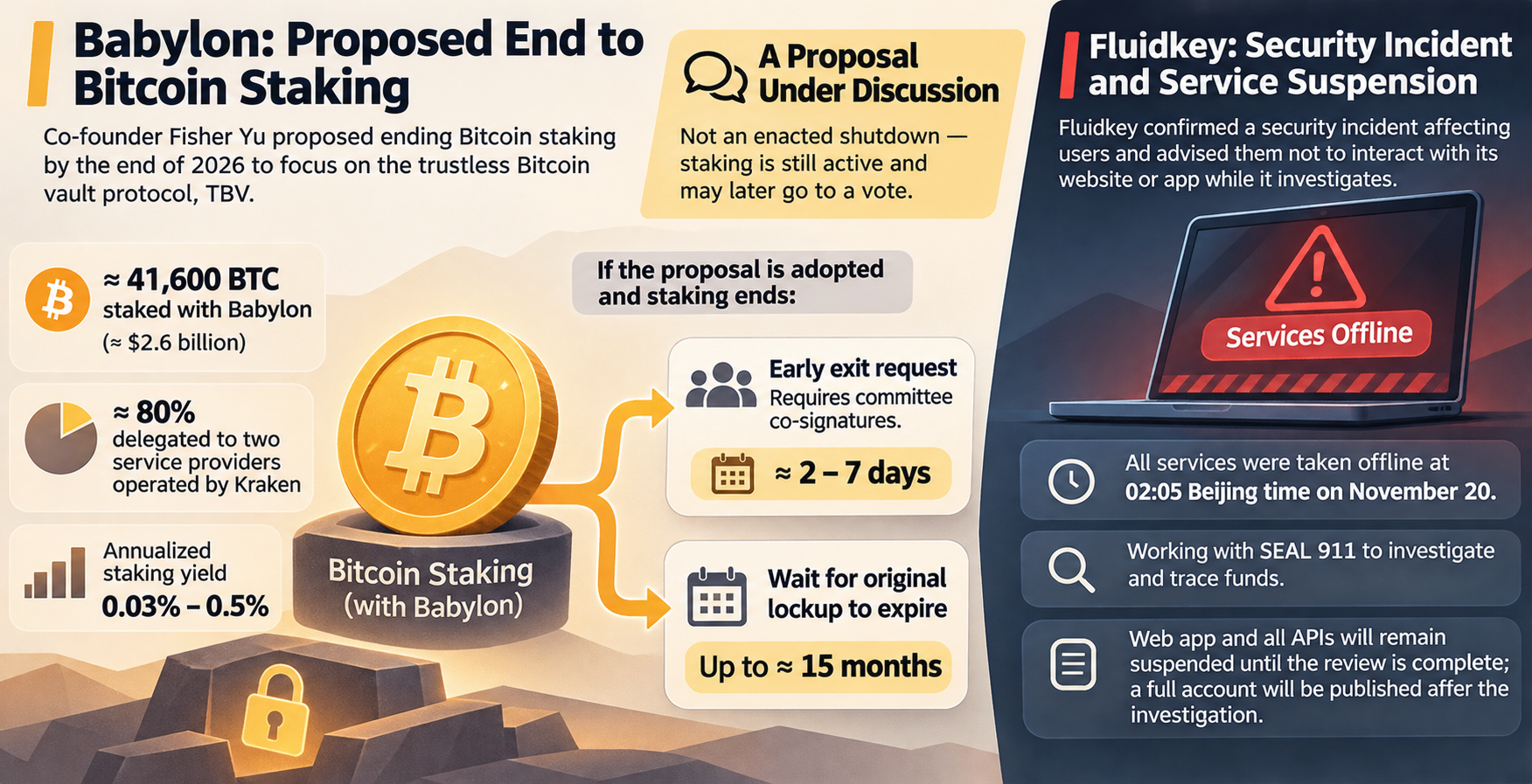
Babylon co-founder Fisher Yu proposed ending Bitcoin staking by the end of 2026 so the team can focus on its trustless Bitcoin vault protocol, TBV. The idea is still under community discussion and may later go to a vote; staking has not been terminated.
About 41,600 BTC, valued at nearly $2.6 billion, was staked with Babylon at the time of the roundup. Roughly 80% was delegated to two service providers operated by Kraken. If staking ends, the BTC would not all unlock at once. Stakers could request an early exit with committee co-signatures, a process expected to take about two to seven days, or wait for their original lockups to expire, which could take up to approximately 15 months. Babylon’s dashboard showed an annualized staking yield of 0.03%–0.5%.
Fluidkey pauses access during investigation
Fluidkey confirmed a security incident affecting users and advised them not to interact with its website or app while it investigates. It said there had been no further unauthorized transactions since it took all services offline at 02:05 Beijing time on November 20.
Fluidkey said it was working with SEAL 911 to investigate and trace funds. Its web app and all APIs will remain suspended until the review is complete; the company said it would publish a full account after the investigation.