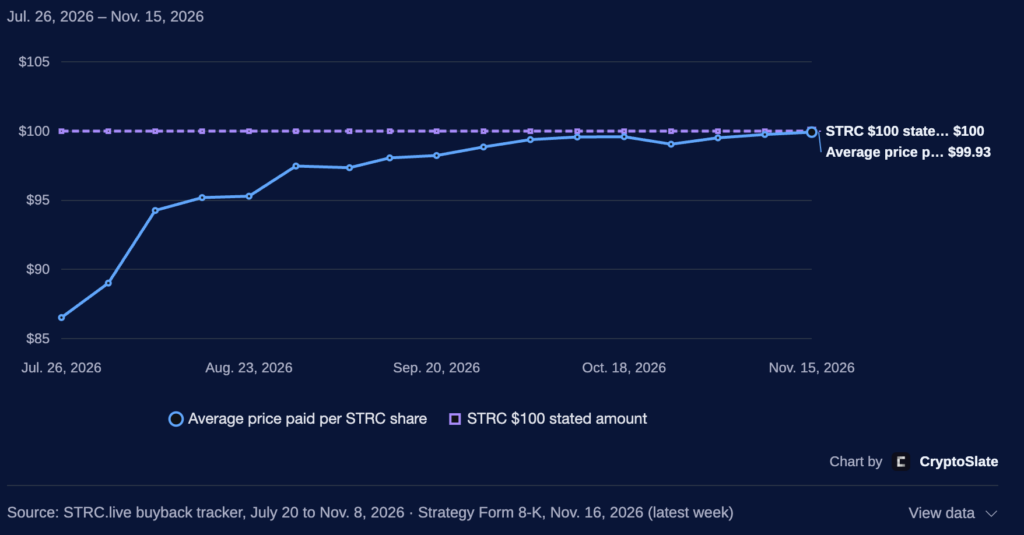
As reported on November 17, 2026, Strategy had spent about $2.7 billion repurchasing its STRC preferred shares since July. CryptoSlate’s review of regulatory filings found that roughly $1.4 billion of that spending occurred from September 28 through November 15, when weekly average purchase prices ranged from $99.06 to $99.93 per share—close to STRC’s $100 face value.
That pattern contrasts with the approach Strategy CEO Phong Le described in July: buying more when STRC traded at a substantial discount and less as it approached $100. In the July 20–26 reporting period, Strategy spent $25 million at an average of $86.52 per share. In November 9–15, it spent $228.1 million at an estimated average of $99.93. The latter estimate is calculated from reported spending and 2,282,510 shares; the rounded spending figure makes the cents approximate.
Repurchasing STRC reduces future dividend obligations on the retired shares; the preferred stock’s annualized dividend rate was 12%. But the existing authorization limited how long Strategy could maintain that pace. Its latest SEC filing showed $332.2 million remaining under a $3 billion authorization. Analyst Zaid suggested the company might raise that limit again, as it had in September and October. That was a forecast, not an announced increase.
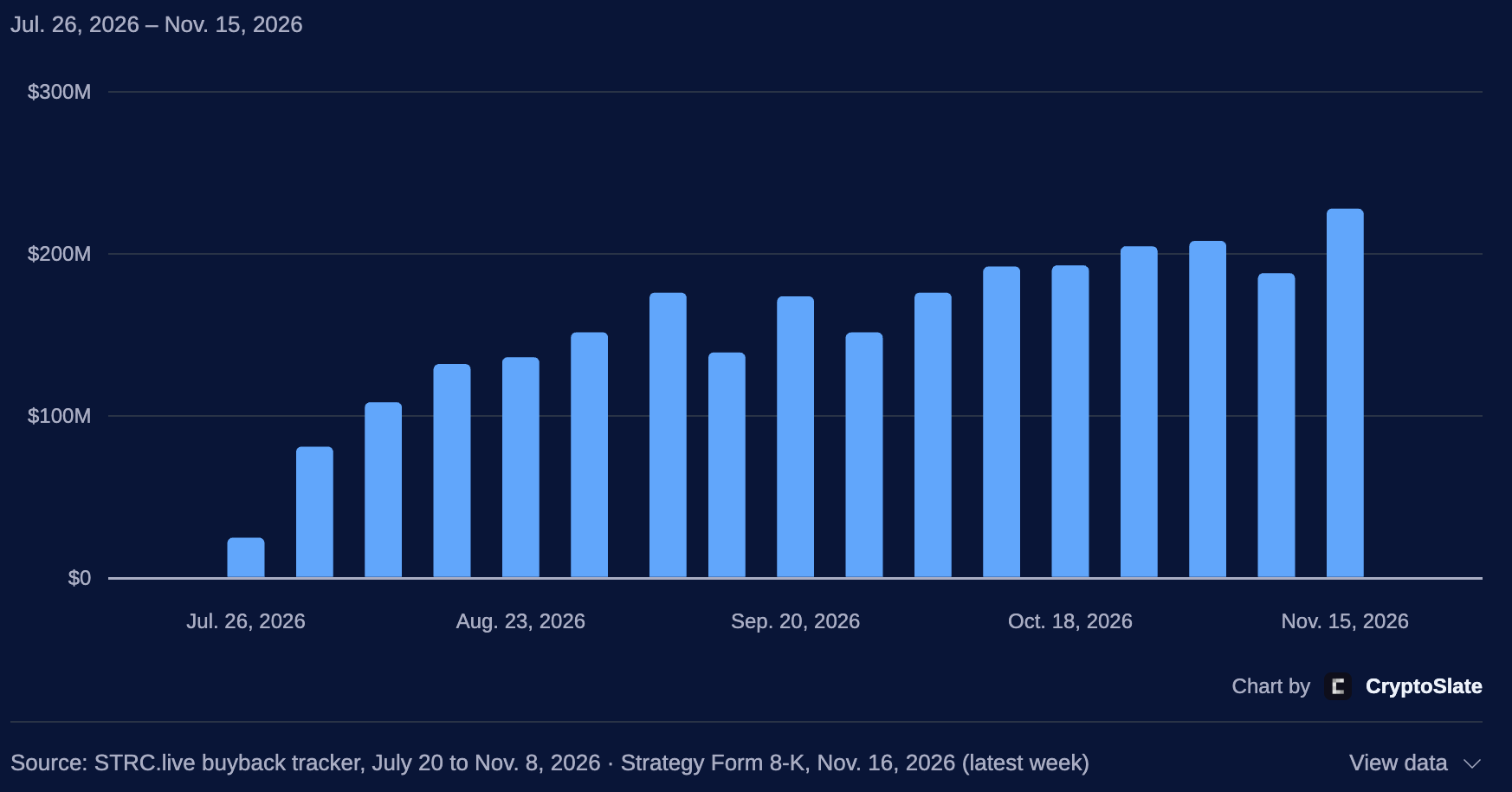
Meanwhile, Strategy continued buying Bitcoin at a slower pace. From September 28 through November 15, it spent about $253 million on 3,183 BTC, compared with approximately $1.39 billion on STRC repurchases. In the final reported week, it bought 485 BTC for $33.4 million while spending $228.1 million on STRC. After those purchases, the article put its Bitcoin holdings at 850,849 BTC, with an aggregate purchase cost of about $64.2 billion.
Strategy also faced a potential funding constraint: MSCI had confirmed that it would remove the company from its global equity indexes effective December 1, 2026, under rules concerning non-operating companies. The article noted that index-fund selling could pressure MSTR shares and make future common-stock issuance less attractive; those market effects were possibilities, not confirmed outcomes.